Musings and updates at twitter.com/capriccioblog
Showing posts with label Barbican. Show all posts

Thursday, 29 May 2014

Rosenkavalier with Schwanewilms, Connolly, Crowe, LSO, Elder

With Glyndebourne's new Der Rosenkavalier not yet opened, and the Birmingham performance just around the corner, this concert acted as a wonderful taster menu of this opera, taking all the most delicious cuts of that score, immaculately prepared with the finest ingredients. The good music of Der Rosenkavalier is so great that the opera always comes to mind if I'm asked to list my favourite ten operas (or whatever the latest twitter game might be.) In a great performance with three great female voices, there is little to match it for sheer sonic beauty. The whole thing is made even more moving by Hofmannsthal's wonderful libretto, and again in the hands of an artist who can respond to its nuance and gentle colours, there is little like it in the repertoire. But the appalling languors of the opera, the huge stretches of routine, always stick in my throat, and make the piece exceptionally difficult to stage effectively in my experience, that is, to make it a fully convincing, engaging evening.

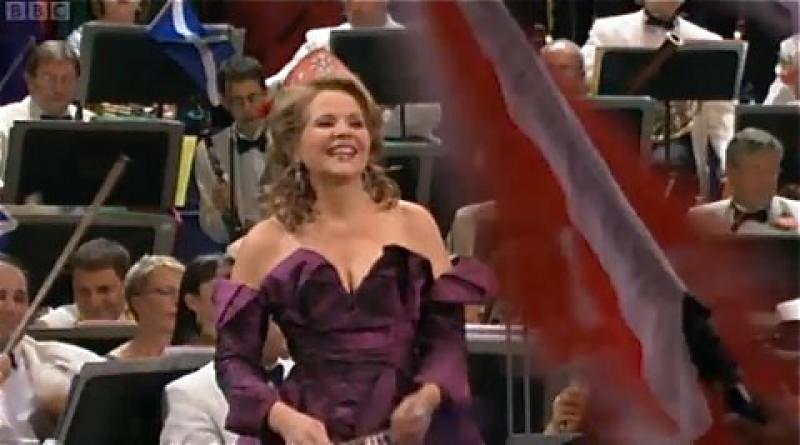
These concerns don't arise in a concert performance of highlights, and this generous selection, lasting well over an hour, was pure pleasure from start to finish. We first got the opening sequence - the sex/orgasm overture, afterglow, morning light, Mohammed's interruption, and coffee. The chemistry between Anne Schwanewilms' Marschallin and Sarah Connolly's Octavian was so believable and tender, that I'm not sure I've seen anything more erotic on an operatic stage this year. Funny how the acting can be so much more natural, intimate and engaging without all the other trappings of grand oper: sets, wigs, 'realistic' period costumes, and perhaps most crucially without a long rehearsal process which can kill spontaneity. A 50 year old woman trying to look like a 17 year old boy isn't sexy. A 50 year old woman playing male teenage passion and frustration is. I often find opera singers' acting to be more moving in concert performances, perhaps also because one is often so much nearer (other people on twitter were quick to blame nefarious directional interference (read: regie theatre directors) for this discrepancy when I mentioned it there.I think it can be a straw man - how many of those sorts of productions are there really? In my experience, singers are just as often disengaged and just "walking a part" in traditional productions).

Then with the same two singers, we got the Marschallin's monologue, the final half hour of the first act. Where in the first act Schwanewilms had been all smiles and hand caresses, here she was preternaturally still, and barely even looked at Connolly, who looked not just upset, but destroyed, her eyes red lakes of fear and sadness. Text book being an obstacle to your fellow actor from Schwanewilms! She has one of the most interesting and strangely beautiful soprano voices on the stage today, and chooses to access an enormous palette of vocal colours so that each phrase, each word, is delicately but precisely shaded. Though she can spin a shimmering legato line with the best of them (Her "Da drin ist die silbernc Ros'n" and "Hab' mir's gelobt" were both exquisite), in Strauss she more often chooses to utilise an intimate parlando, and the gentle strength and resonance in the middle and lower register means that this approach works. Her great forebear in the infinitely nuanced vocal line is of course Schwarzkopf, and though the approach is similar, the effect is very different - with Schwarzkopf you get the feeling that every single detail was sculpted and polished in advance, immaculately prepared, but animated in the moment by her smiling spirit. With Schwanewilms it all feels much more spontaneous, that she "lets" the voice do what it will in that moment, whilst playing the intention that she has. This has benefits and drawbacks. On the one hand she is able to truly react physically and vocally to anything her stage partners might throw at her, which means she is always engaging and always "on"; on the other hand, the voice can occasionally do something quite unexpected and unbelcanto - one of her mannerisms is a single bell like note that is totally disconnected from the line, especially for a sudden leap above the stave. I often get the feeling with her voice that she is masterfully, but constantly, navigating a fundamentally 'bumpy' vocal topography that is intrinsic to the voice. Again there is a similarity here to Schwarzkopf (though with Schwarzkopf the feeling is much less acute as the basic vocal technique was so exceptionally well controlled), who one also feels sometimes has found a creative technical or expressive solution to a fundamental, intrinsic unevenness in the vocal mechanism, however beautiful the timbre is. The opposite would be say Tebaldi, whose vocal registration has an absolutely smooth topography as she moves up and down the scale. I personally enjoy the colours and quiddities of Schwanewilms's voice because the expressive intent is always so clear, the connection with text is immediate and nuanced, and the voice has just combination of shimmer and depth. She will often do something quite unexpected with a familiar phrase which means one can hear this much loved music afresh.

This is all to say that she is an exceptionally accomplished and moving Marschallin, and now that Fleming, the greatest Marschallin since Schwarzkopf, is declining and only inconsistently at her best, Schwanewilms may well be the finest exponent of this role on the stage today. Refined, noble, wistful, thoughtful, beautiful: I certainly don't know of anyone I would prefer to hear in this role currently.

Sarah Connolly is still surely the most handsome performer of travesti roles around, and one hopes that she will continue to sing them into her sixth decade, when traditionally mezzos start giving them up. The voice and approach is very different from Schwanewilms' which makes her an excellent partner in this opera. Connolly has a much more traditional, consistent vocal production, capable of delivering Octavian's glorious, powerfully soaring outbursts without strain or compromise. One hears in the timbre that the voice is beginning to age, but the line remains firm and the voice in control. Though her German pronunciation is very good, one senses that the words are not being lived one by one in the moment - the whole phrase has the right emotional colour, but it doesn't sound like she has fluent German. The same was true of Lucy Crowe, whose pronunciation was also very good, but lacked that hard to define sense of true fluency and nuance. Perhaps this is expecting too much, but in Strauss of all composers, I miss that last degree of textual acuity because Strauss often composes word by word rather than by phrase, so any loss of specificity in the response to the text notices far more than many other operatic composers. I'm being insanely fussy perhaps and that this was even in question is partly an indication of the high standard of the whole performance.

Lucy Crowe was very nice as Sophie: a lovely shimmery vibrato, just right for her fach, and a very slight hoarseness in the sound that adds colour and bite. Her musicianship and vocal solidity in the lower registers means she can more than tackle an oft underestimated role. What is slightly uncomfortable is a pronounced wobble above the stave, the vibrato widening and relaxing at just the point when it should be most gleaming and vibrant. I don't know if this was a one off problem or a recurrent issue, but one hope it will be addressed soon, lest the voice decline before its time. The collection of tenors and baritones that made up the Marschallin's coachmen and then Faninal's single phrase in the last scene were true luxury. I have never heard these parts better sung, ever. Unfortunately I can't find my programme, and they're not on the Barbican website, so do comment below if you know who they were!

The LSO under Mark Elder played with great vigour, utilising a big boned, lustrous tone - appropriate for the Barbican's acoustics, but I can imagine that it might have covered the singers a little too often had I not been sitting so close to the stage. What was missing was that refined Viennese glow in the sound and lissome flexibility in the rhythm, but with playing as accurate, juicy and confident as this it's hard to complain. The final trio, which is somehow more special in live performance even than on record, was superbly delivered from all. From my seat, seeing and hearing every nuance from these singers, in the most glorious sections of maybe the most sumptuously beautiful opera ever composed, this was one of the most enjoyable concerts I've been to this season.


Sunday, 29 September 2013

L'Orfeo at the Barbican

28/09/13
Academy of Ancient Music

This "concert hall staging" of L'Orfeo was the first in a projected Monteverdi cycle that the Academy of Ancient Music plans to undertake over the next three seasons. Director Orpha Phelan updates the piece to the present day, the wedding guests marching down the isles of the stalls in preparation for what looks like a typical British wedding. Security guards stand around in the foyer and onstage, one of whom it turns out is conductor/musical director Richard Egarr who surprisingly takes his place at the harpsichord. As Orfeo awaits his bride Eurydice, who it seems is not that keen to marry Orfeo, it is announced that she has been killed by a snake, though it seemed here that she might actually have been in some way murdered. Orfeo is lead by a nurse (Speranza) to Eurydice cadaver on a mortuary bed, and is discouraged from staying by an angry doctor (Coronte). Orfeo's grief here becomes a sort of mad scene, where he merely imagines going to hell. John Mark Ainsley is extremely moving here as he casts around desperately looking for a way out of his predicament. After the interval we see that Orfeo has hit the bottle, and he makes a scene in front of the party guests - the madness has not yet subsided as he hallucinates images of his dead wife. One of the guests (Plutone) takes pity on him at the urging of his wife (Prosperina) by giving Orfeo more drink and dressing him. Orfeo's father (Apollo) intervenes, telling his son to get a grip and Orfeo listlessly returns to society.

This basically coherent retelling of the story is a clear attempt to remove any classical references or supernatural elements from L'Orfeo, but it's not clear what the audience gains from this. Much of the libretto is rendered bizarre by the new context and it takes a long time to get used to the fact that what the characters are singing is meant to be only an approximation of what they actually mean. I find this sort of production distancing and alienating because you can't rely on your normal expectations of where suspension of disbelief is and isn't required - in short you have relearn the rules of the theatre. Or to put it another way, the realist setting suggests a realist/non-supernatural interpretation of the text, but since that is not attempted here (references to supernatural elements are merely ignored), the dramatic effect is jarring for longer than is comfortable or surely intended. Caroline Hughes' design is simple but serves the idea perfectly well - her lighting is the best part of this and she manages to create a real sense of atmosphere in Act III's mortuary mad scene.

Musically things were much more convincing. John Mark Ainsley is a moving Orfeo, still extremely controlled and expressive, though the voice has lost some of it's former bloom and flexibility. I instantly recognised Katherine Manley's voice having been so impressed with her as Creusa in the ENO's Medea earlier this year. She once again revealed a gleaming, expressive full lyric soprano with an excellent technique in the roles of Prosperina and one of the Nymphs - I would love to hear her in more recent repertoire. Sophie Bevan is luxury casting in the small role of Eurydice. Daniela Lehner was good as La Musica and Speranza, particularly in her low register which has an attractive colour. Thomas Hobbs made a powerful Apollo, beautifully matching John Mark Ainsley in their Act V duet. The smaller roles were mostly excellently taken by the rest of the young cast, though Paul Gerimon was sounding a little choked in the usually fearsome role of Coronte.

Richard Egarr's direction of the Academy of Ancient Music orchestra is energetic and large scale, an approach announced in the magnificent opening fanfare which here didn't so much dance as march into action. The continuo accompaniment is tasteful and varied, if not quite as colourful as seems to be the fashion in some French baroque ensembles. Orchestral playing is unerringly excellent, supporting the singers as gracious equals and Egarr doesn't underline anything - the sighing beauty of the string and woodwind lines, and the blaring majesty of the brass is left to speak for itself.


Thursday, 29 August 2013

2012-13 Season in review

The end of the season, the time when we all feel starved of opera and are raring to go with the next. But I thought I'd just reflect on the 2012/13 season as I think it has been for me the best season since I started this blog.

Staged Opera

1. Der Ring des Nibelungen, ROH. Flawed as it was, my first Ring in the theatre was a total revelation for me, and after years of liking Wagner but not being able to get past my reservations, I now completely "get it" and love it unabashedly. I was totally transfixed for the whole 14 hours.
Das Rheingold
Die Walküre

2. The Minotaur, ROH. A wonderful production of an extremely exciting contemporary opera, with a truly great cast. What more could you ask for? For me this eclipsed Written on Skin, which I couldn't quite love as much as everyone else.

3. Eugene Onegin The Royal Academy of Music's production directed by John Ramster was quite simply one of the best shows I've ever seen, proving decisively that opera does not require huge budgets to be thrilling, moving drama. We knew that already, but it's good to be reminded. Wonderful stuff: so good I saw it twice.

4. Wozzeck, ENO. It's one of my favourite operas, so what a joy to see it so brilliantly directed by a debut opera director, and with a superb cast too. So good I saw it twice. I'd seen the very good WNO Lulu just before which made for a fascinating comparison. (I'm proud of the reviews I wrote for these two productions so if you read any, read those!)

5. Gloriana, ROH. This show got mixed reviews, and most reviewers took issue with the score, but I found it immensely enjoyable, with Susan Bullock a magnetic central presence, and Richard Jones' production unbeatable. So much beautiful music to be had in this score: so good I saw it twice.

6. Ariadne auf Naxos Glyndebourne. Again, this got very bad reviews from most, but I found this to be the most moving and telling production of Ariadne that I've ever seen, and this is a very cherished opera for me. So good I saw it twice. My review explains why!

7. Billy Budd Glyndebourne. Magical evening where music, stage, singing, acting, conducting, playing were all in perfect accord. So good I saw it twice.

Other notable mentions: Lohengrin with WNO was a good production, with some great singing - my other great Wagner experience this season. Don Carlo at the ROH somehow didn't quite add up for me, but I was lucky enough to see Harteros on opening night, and she was magnificent (as were the rest of the cast). Medea at the ENO had a very nice cast, and was a stunning production, though the score was not quite as thrilling as had been promised by McVicar. Death in Venice at the ENO and The Emperor of Atlantis with ETO were also beautiful to look at, but didn't quite deliver in other respects.

Disappointments: I didn't have any expectations going into Robert Le Diable at the ROH, but I still left disappointed that so much effort and money had been lavished on this piece of flim flam. Some serious reviewers found things to enjoy, but I cannot fathom how. Kasper Holten's fussy, dramatically weak, Eugene Onegin raised alarm bells for the next decade of the ROH, but one has to remain hopeful for the upcoming Don Giovanni. Nabucco and La Rondine were also lowlights.


Concerts

Some of my very best experiences this season were concert/semi staged performances of operas:

1. Knussen double billBarbican. Revelatory - overwhelmingly beautiful contemporary operas.
2. Into the Little Hill, Wigmore Hall. George Benjamin's first opera captivated me, where Written on Skin had left me a little cold. Superb piece.
3. Capriccio, ROH. My favourite opera served by an excellent cast. Catnip for Capriccioblog. So good I saw it twice.
4. Britten Canticles, ROH. Britten, Ian Bostridge, Iestyn Davies. Enough said.

5. Other things: At the Royal Festival Hall with Jurowski, Karita Mattila gave an astonishing account of the final scene of Salome, despite some serious vocal issues. Knussen at 60, of which the abovementioned double bill was a part, was a wonderful event. I experienced some truly excellent chamber music too this season. In Belgium I saw Britten's String Quartet no.2 as part of Festival Resonances (not reviewed) in a superlative performance that managed to capture both the extraordinary diamantine beauty of surface of this quartet and the composer's deep pain, manifest as a sort of eerie emptiness at the music's heart. A curious mixture of Apollonian reserve and psychological intensity, both such hallmarks of Britten's oeuvre, was shatteringly conjured by Katharine Gowers, Beatrice Philips, James Boyd and Martijn Vink. Philips and Boyd were again present for the totally extraordinary Lewes Chamber Music Festival concert of Janacek's On an Overgrown Path that reduced me to uncontrollable tears. Violinist Pekka Kuusisto's recital at the Wigmore Hall proved once again that he is one of the few essential artists of the age. The London Haydn Quartet also gave some very interesting late Beethoven at the Conway Hall, played as if an extension of Haydn; but what really sticks in my mind is their Protean performance of Haydn's quartet op.50/4 that made late Beethoven look tame: too explicable, too rounded, too complete next to it!!

Disappointments: Maria Guleghina and Christiane Oelze (neither reviewed) were both great artists in their prime, but I had to leave at the interval for both of their Wigmore recitals (the latter with Pierre Laurant Aimard) because the voices had declined so much. Pretty Yende also made a disappointing Wigmore debut (not reviewed), revealing a shining voice, but totally monotonous musicianship. She's very young still, and so has time to develop, but the intimacy of a solo recital revealed her flaws rather than her strengths. Joyce Didonato's Drama Queens at the Barbican was dispiriting because she was virtually inaudible from the 11th row of the stalls, but at least I discovered the astonishing musicianship of violinist Dmitry Sinkovsky.


All in all a very enjoyable season for me. The complete list of my 2012/13 reviews are available on this handy page (also linked on the right there). Roll on 2013/14!!!


Thursday, 7 February 2013

Joyce DiDonato's Drama Queens at the Barbican

06/02/13

The recentish glut of albums of baroque ultra obscurities continues to be a mixed blessing. Cecilia Bartoli reglamorised the idea of baroque coloratura for the masses in the late 1990s and early 2000s, but hers is an instrument of unique timbre and peculiar but spellbinding musicianship - the mere sound is often enough to carry what is sometimes very clearly second or third rate material straight to the heart. I have my own theories on why she continues to plough this furrow, but she remains the best at it.

I found this to be a very mixed evening. Despite immaculate playing and clear commitment and enthusiasm from all, the repertoire presented here was tryingly slight (excepting the Handel arias). It entertains well enough moment by moment, but there's no sustenance to be found here, no lasting impact on the ears or soul. Of course this sort of evening needs a soloist of stature and character to carry it, and unfortunately, for me on this occasion, Joyce DiDonato came up short.

The tonal quality of the voice is quite "thin", with a very fast, narrow, brittle vibrato, attractive middle and bright top. In music where the voice is not supported by a wash of orchestral sound this thinness becomes a problem: the sound feels undernourished and we hear every defect. The main issue I think is that the airflow is not steady, so the vibrato has lots of little bumps and blips in it and becomes especially unstable when singing quietly and also when singing high. I've just looked back to the previous times when I have reviewed DiDonato on this blog and find that I have written almost the same things. It's a voice that's easy to like but hard to love: there's nothing to be intoxicated by, no hidden surfaces in the sound, no bloom, no perfume.

Like Bartoli, DiDonato's coloratura is heavily aspirated which can sound fine on recordings if the listener doesn't mind it, but in the concert hall the sound becomes muddy, inherently limited in volume and tone, and downright unpleasant in the low register. Her intonation is basically good, though larger intervals can pose problems. I have heard her live much better than here (for example in The ROH La Cenerentola and her Wigmore Hall recital), and part of it must surely have been the poor acoustics of the Barbican, but I was sitting in top price seats (11th row of the stalls) and I was struggling to find positives to focus on. I'm willing to believe it was a more satisfying experience closer to the stage, and also that she perhaps was having an off night. She's a fun personality and fun to watch as she seemed to be having a great time on stage along with the players, not to mention the drooping grandeur of her OTT Vivienne Westwood dress (not dissimilar from the ones that the designer has made for Renée Fleming) but this was a disappointing evening from her.

The playing of Il Complesso Barocco was buoyant, fresh and nicely shaped. The leader Dmitry Sinkovsky revealed an absolutely gorgeous sense of line and phrasing in his solos and his Vivaldi concerto "Per Pisendel" RV242 was sensationally good. A fantastic violinist who I hadn't heard of before.

Saturday, 21 April 2012

Der Freischutz at the Barbican


19/04/2012
Colin Davis, LSO

Seriously enjoyed myself at this one. As I say at the end, I just watched the thing ufold with childish glee and any slight problems with ensemble or vocal quality just fell away. Such a joy. Basically it's not as serious a work as it wants to be, and there certainly are perfunctory patches (the ending for instance), but overall the good patches more than outweigh the bad. It's obvious what Wagner took from Weber when we hear Lohengrin and Tannhauser next to Weber's works, and obvious too that Wagner is a much greater musical and dramatic mind - the symbolism resonates, the characters possess far greater depth, the drama unfolds with far greater surety. That said, Weber is often the more beautiful aurally, certainly if we compare it to these early works of Wagner, and there are times when I might very well say I prefer the music of the lesser talent.

I reviewed it here: http://www.bachtrack.com/review-der-freischutz-lso

Here's a preview:
While Weber is widely acknowledged as being of historic importance as the link in the German operatic tradition between Beethoven and Wagner, his operas are still rarely staged in England, and even in concert remain a relative novelty. Curious because this is music of the utmost vitality and beauty and at times he surely borders on genius. Not the same level of genius as those two masters that flank him, but an extraordinary ear for sonority, a very pleasing classical sense of form, and an unquestionable gift for vocal writing make him a very interesting and likeable composer.

Sunday, 18 March 2012

Robin Ticciati and the LSO play Strauss, Mahler and Brahms (with Christopher Maltman)

Barbican
15/03/2012

A disappointing concert this as in theory I very much like all artists involved.

I wrote about it for Bachtrack. I asked other people sitting around me to check that it wasn't just me feeling the fundamental disconnect between orchestra and conductor.

Strauss's Tod und Verklärung is the work of a young man seeking to impress with his profundity and modernity after his early success with the wildly exuberant Don Juan. It is often said that the "death" part is more convincing than the "transfiguration" part, and this is largely true - while the former comes off beautifully, the latter is far too prosaic musically for the exalted subject matter. It's not really a question of age (Strauss was just 25 when he composed it), but a matter of compositional strengths, proclivities and weaknesses revealing themselves early - Strauss' musical genius is best expressed by sentimentality, extremity, vulgarity, stylisation: he is simply not capable of Wagnerian profundity, weight and depth. Robin Ticciati went a long way towards papering over these cracks, and slowly the huge symphonic arc of the tone poem was revealed with a glistening sweep. But there were balance issues - the brass and percussion generally far too loud, the little woodwind fragments in the beginning not cutting through the gloriously lush string textures. Something too wasn't connecting musically - there was a curious lack of passion or commitment even although all concerned were making all the right motions.


Well, can't win em all...