17/05/13
La donna del lago is only rarely performed and so there is unlikely to be a "standard" version in the minds eye that we can compare a new production to, particularly one which attempts a lot of regie as this production by John Fulljames does. Here's my account of what I saw. The opera opens with Elena ("the lady of the lake") as a beautiful museum piece in a flapping gossamer shawl, a legendary figure, literally in a glass case as a group of society gents peer at her. In the background, painted on to the oak panelling, is a kitsch, idealised version of the Scottish landscape - these 19th century gentlemen have captured nature, rendering it benign, decorative, tamed. They let her out and she begins to sing - so we're seeing them indulging in a spot of idealised history, after having conquered the Scots. It turns out that these men are representatives of the invading king, who meets Elena and is captivated by her beauty. Though she flirts with this Monarch (Uberto) without realising that he is the king, Elena actually loves Malcolm (a highlander, mezzo trouser role) and they proclaim their love for each other (there's a wonderful duet for the two mezzos here). However this is a love quadrangle: she's betrothed to Rodrigo, the violent, rapist leader of the highlanders. After much arguing over who will get Elena (I'm simplifying things), Rodrigo is killed in battle which the invading posh gents win, and finally the king realises that Elena will never love him and shows clemency to the rebel Malcolm, allowing him and Elena to wed. Except, now tamed, controlled, they are all turned into museum pieces and Elena and the others are returned to their glass cases.
Except that this is all wrong. This interpretation is very different to what the production designers intended, and I know this because the official explanation for this production exists on youtube. The concept is so complicated and in my opinion not clearly enough realised on stage that if you hadn't watched the video before hand (as I hadn't - I just watched it after writing my account above) I think it would be a very tall order to get it all. Their newly constructed narrative is based on the idea of historical periods being reinterpreted to fit the exigencies of present political situations - but you have to know some very specific information about some obscure organisations of Rossini's/Walter Scott's time (two characters are dressed as these men apparently, which explains their strange observing behaviour) to interpret it "correctly". Much as I encourage radical reimaginings of operas when done well, this sort of focus on extremely specific historical situation is for me not what good theatre is about, though some will no doubt lap it up. Visually I'd say the design was quite strong, the sets by Dick Bird nicely atmospheric whilst remaining simple, the lighting good and the costumes effective. There are some beautiful effects - the first time Elena is revealed in her glass case for instance, and also the shadows cast on her castle as it rotates the first time we see it - but these are purely aesthetic matters that don't add to our understanding of the piece.
Great singing is the thing in this production, but actually the "stars" are largely outshone by their less famous colleagues. Daniela Barcellona in the trouser role of Malcom is simply superb - the voice is quite large, the coloratura brilliantly executed, the chest register extremely rich and well developed, and her commitment to using Rossini's music to express emotion unsurpassed by the rest of the cast. The top is a bit strident and unblended, but this was exciting singing. Physically her portrait of a swarthy highlander is absolutely extraordinary - you never doubt for a second that you are seeing a powerfully masculine lone ranger in front of you. Also magnificent is Michael Spyres, brought in last minute to cover the "baddie role" of Rodrigo after an ailing Colin Lee was forced to pull out. Rodrigo is a role of extremes, even within the bel canto repertoire, requiring heroic weight in the extended coloratura passages, very high singing, and also a very strong low register. This was an exceptional début - Spyres delivered all of this in spades, offering full support of the vocal line across at least two whole octaves from a very rich, powerful, warm and beautiful baritonal low register, to a firm and nicely coloured middle, to a clear and almost as beautiful high register. He's not baritonal in the Kaufmann sense because the top is nowhere near as covered and has authentic Italianate ping. The coloratura is accurate and exciting. Occasionally some of the very top notes were slightly pinched, but I rate this amongst the very best tenor singing we've heard this season. Physically too, he was very convincing, and I can't wait to hear more from him. Strange that he didn't get a bigger ovation at the curtain calls.
Joyce DiDonato sang quite well, but it took until her spectacular final aria for her to really get going - this last piece "Tanti affetti" was easily the best she sounded all night - the coloratura incisive, the timbre firm, the dynamic control exquisite and we finally got to hear some trills at the ROH! In general this is probably the best I've heard her live. The problems are the same though: the vibrato is extremely fluttery, the voice a thin silvery thread (and therefore rather unitalian sounding), and her top sounds tight and restricted. The tension in the sound can be a resource for her to use, but it can also make for uncomfortable listening, and neither the legato nor the intonation is consistent enough to allow the listener to relax and be fully captivated. Acting wise she does quite nicely with what is a rather meek role. I'm sure her fans won't be disappointed, but it's not a voice I can cherish.
This was the first time I have heard Juan Diego Flórez live and I am almost embarrassed to say that I wasn't enamoured, given his apparently universal adoration. The good points are obvious - the extraordinarily firm top, the superb intonation, the razor sharp coloratura, the unbelievable squillo. But there were things I didn't like - he is unable to colour the voice at all - the sound you hear at the beginning of the night is the same sound you'll hear for the entire evening. This would be OK, but there's a lot of "noise" in the sound (harmonics that are jarring with the fundamental) which gives it a hardness that can turn bleating if he pushes too hard. And he did just that in the trio which involves the two tenors hitting the same high note repeatedly - Spyres sounded ringing, beautiful, not massive, but Florez pushed them so that they were much louder, but lost quality - a couple even lost their vibrato entirely. Any sort of interpretive nuance was hard to come by too - connecting musical line and emotion is not a strong point. Add to this a thin low register (high notes aren't everything), stock acting (e.g. lots of raising the arms) and a lack of focus on his colleagues, and the result is a rather unengaging stage personality.
The rest of the cast are decent, especially Justina Gringyte as an extraordinarily loud and pingy Albina (another trouser role). The ROH orchestra are flabby and ponderous under Michele Mariotti, never capturing the picante bite and electric detail of Rossini's writing. There are ensemble issues too, but it's the laxness that makes the music seem hazy and lethargic - too much body, not enough energy.
Overall, this is probably worth going to see for the singing, and reasonably entertaining production, but beware it's a real marathon piece (first act finished at 8:43pm, after a 7:00pm kickoff) so not if you don't love Rossini!
Showing posts with label Joyce DiDonato. Show all posts
Showing posts with label Joyce DiDonato. Show all posts
Saturday, 18 May 2013

Thursday, 7 February 2013
Joyce DiDonato's Drama Queens at the Barbican
06/02/13
The recentish glut of albums of baroque ultra obscurities continues to be a mixed blessing. Cecilia Bartoli reglamorised the idea of baroque coloratura for the masses in the late 1990s and early 2000s, but hers is an instrument of unique timbre and peculiar but spellbinding musicianship - the mere sound is often enough to carry what is sometimes very clearly second or third rate material straight to the heart. I have my own theories on why she continues to plough this furrow, but she remains the best at it.
I found this to be a very mixed evening. Despite immaculate playing and clear commitment and enthusiasm from all, the repertoire presented here was tryingly slight (excepting the Handel arias). It entertains well enough moment by moment, but there's no sustenance to be found here, no lasting impact on the ears or soul. Of course this sort of evening needs a soloist of stature and character to carry it, and unfortunately, for me on this occasion, Joyce DiDonato came up short.
The tonal quality of the voice is quite "thin", with a very fast, narrow, brittle vibrato, attractive middle and bright top. In music where the voice is not supported by a wash of orchestral sound this thinness becomes a problem: the sound feels undernourished and we hear every defect. The main issue I think is that the airflow is not steady, so the vibrato has lots of little bumps and blips in it and becomes especially unstable when singing quietly and also when singing high. I've just looked back to the previous times when I have reviewed DiDonato on this blog and find that I have written almost the same things. It's a voice that's easy to like but hard to love: there's nothing to be intoxicated by, no hidden surfaces in the sound, no bloom, no perfume.
Like Bartoli, DiDonato's coloratura is heavily aspirated which can sound fine on recordings if the listener doesn't mind it, but in the concert hall the sound becomes muddy, inherently limited in volume and tone, and downright unpleasant in the low register. Her intonation is basically good, though larger intervals can pose problems. I have heard her live much better than here (for example in The ROH La Cenerentola and her Wigmore Hall recital), and part of it must surely have been the poor acoustics of the Barbican, but I was sitting in top price seats (11th row of the stalls) and I was struggling to find positives to focus on. I'm willing to believe it was a more satisfying experience closer to the stage, and also that she perhaps was having an off night. She's a fun personality and fun to watch as she seemed to be having a great time on stage along with the players, not to mention the drooping grandeur of her OTT Vivienne Westwood dress (not dissimilar from the ones that the designer has made for Renée Fleming) but this was a disappointing evening from her.
The playing of Il Complesso Barocco was buoyant, fresh and nicely shaped. The leader Dmitry Sinkovsky revealed an absolutely gorgeous sense of line and phrasing in his solos and his Vivaldi concerto "Per Pisendel" RV242 was sensationally good. A fantastic violinist who I hadn't heard of before.
The recentish glut of albums of baroque ultra obscurities continues to be a mixed blessing. Cecilia Bartoli reglamorised the idea of baroque coloratura for the masses in the late 1990s and early 2000s, but hers is an instrument of unique timbre and peculiar but spellbinding musicianship - the mere sound is often enough to carry what is sometimes very clearly second or third rate material straight to the heart. I have my own theories on why she continues to plough this furrow, but she remains the best at it.
I found this to be a very mixed evening. Despite immaculate playing and clear commitment and enthusiasm from all, the repertoire presented here was tryingly slight (excepting the Handel arias). It entertains well enough moment by moment, but there's no sustenance to be found here, no lasting impact on the ears or soul. Of course this sort of evening needs a soloist of stature and character to carry it, and unfortunately, for me on this occasion, Joyce DiDonato came up short.
The tonal quality of the voice is quite "thin", with a very fast, narrow, brittle vibrato, attractive middle and bright top. In music where the voice is not supported by a wash of orchestral sound this thinness becomes a problem: the sound feels undernourished and we hear every defect. The main issue I think is that the airflow is not steady, so the vibrato has lots of little bumps and blips in it and becomes especially unstable when singing quietly and also when singing high. I've just looked back to the previous times when I have reviewed DiDonato on this blog and find that I have written almost the same things. It's a voice that's easy to like but hard to love: there's nothing to be intoxicated by, no hidden surfaces in the sound, no bloom, no perfume.
Like Bartoli, DiDonato's coloratura is heavily aspirated which can sound fine on recordings if the listener doesn't mind it, but in the concert hall the sound becomes muddy, inherently limited in volume and tone, and downright unpleasant in the low register. Her intonation is basically good, though larger intervals can pose problems. I have heard her live much better than here (for example in The ROH La Cenerentola and her Wigmore Hall recital), and part of it must surely have been the poor acoustics of the Barbican, but I was sitting in top price seats (11th row of the stalls) and I was struggling to find positives to focus on. I'm willing to believe it was a more satisfying experience closer to the stage, and also that she perhaps was having an off night. She's a fun personality and fun to watch as she seemed to be having a great time on stage along with the players, not to mention the drooping grandeur of her OTT Vivienne Westwood dress (not dissimilar from the ones that the designer has made for Renée Fleming) but this was a disappointing evening from her.

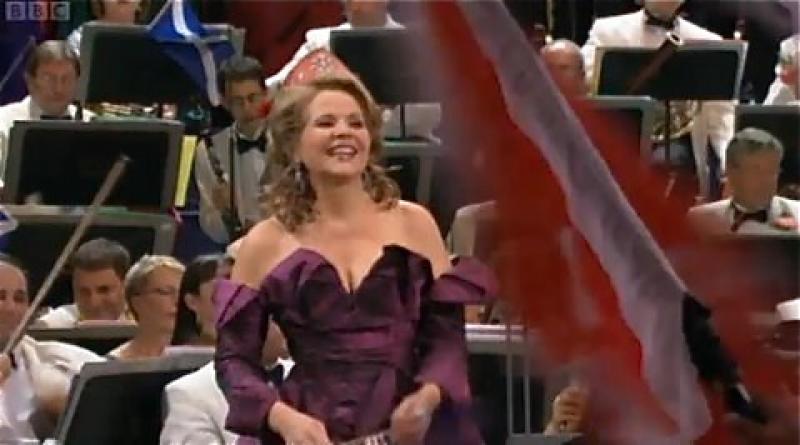

The playing of Il Complesso Barocco was buoyant, fresh and nicely shaped. The leader Dmitry Sinkovsky revealed an absolutely gorgeous sense of line and phrasing in his solos and his Vivaldi concerto "Per Pisendel" RV242 was sensationally good. A fantastic violinist who I hadn't heard of before.
Saturday, 7 July 2012
Joyce DiDonato at the Wigmore Hall
06/07/2012
This week has been a bit of a mezzo fest for me - seven days ago I went to see the wonderful Susan Graham at the Wigmore Hall, then saw an extremely promising young mezzo in the RCM Figaro, then Elizabeth DeShong in yesterday's Brynfest, and today back to the Wigmore Hall for Joyce DiDonato.
Joyce DiDonato seems to have an immense following, so I'm going to risk courting controversy and suggest that I don't think she's a star because she has a particularly beautiful voice. The very tight, narrow vibrato gives the sound a brittleness and edge that isn't at all luxurious or warm, and it's (the vibrato that is) inherently unsteady too, with little "blips" heard in every note of extended duration. It's not vocal tension in the normal sense, with jaw shaking and tongue compression (with all its incipient problems), but there's a shivering tension in the sound that is slightly uncomfortable. This is not bad. This is its appeal. In the right repertoire she's exciting to listen to because of these vocal peculiarities and this distinctive sound and her risk taking. Unfortunately this evening's Venice themed recital didn't quite play to her strengths enough but was nevertheless pretty enjoyable.
One great thing was all the unusual repertoire she chose - I hadn't heard a single one of these pieces before. Sort of Bartoli-esque in this way (stylistically too the biggest audible influence, and sometimes not all that different in tone either). I never quite understand the chronological approach to recital building, except of course when it becomes the thematic point of a recital. Here the theme was Venice, but it seems that starting with Baroque music, as so often happens, is not the easiest way to warm up the voice, or "test out" the room. The two arias Onde chiare che sussrrate and Amato ben from Vivaldi's Ercole sul Termodonte (nope, no idea either) were surprising and very inventive - really great to hear, and surprisingly good with piano. Unfortunately DiDonato seemed unsettled at this stage, legato singing not a strong point anyway, and here the awkward jumps in the vocal line proving problematic. The Fauré Cinq mélodies ‘de Venise’ are all about subtle line, quiet detail and atmosphere, but again didn't seem ideally matched to DiDonato's strengths - she was frequently out of tune and didn't sound at ease in the endlessly rapt cantilenas.
Next came another rarity, and an absolute beauty too - a late (1858) song cycle by Rossini. I love Rossini an unreasonable amount. Can't exactly say way. Easily my favourite of the bel cantists. He's just so cool. And I like his late, completely out of fashion stuff too, where he's ignoring everything that's going on around him musically and is just continuing to plough his own furrow. There's special stuff in there. Anyhow, Rossini for me is a perfect match for DiDonato and plays to all her strengths - excitement and abandon are what this music needs and that's what DiDonato delivered in spades. The Italian language seems to be by some distance the best for her voice in terms of sound and also interpretively - she sounds incisive, expressive, confident and commanding in a way she doesn't quite so fully in French or German, and when singing quietly too, the fluttery tone here seems just right. These songs (La regata veneziana) emerged as charming miniature masterpieces, quirky and inventive, DiDonato singing them with complete conviction and a humour, darting and swinging through their corners and heights.
After the interval, Schubert's wonderful Gondelfahrer was quite lovely, and the fluttery, shimmery vibrato here somehow recalled Schwarzkopf. David Zobel's piano playing was beautifully shaped here, and throughout he displayed a very lovely tone and unnerringly crisp playing. Schumann's Zwei Venetianische Lieder from Myrthen were less special but after that we got Head's Three songs of Venice which are atmospheric, subtly jazz inspired, slightly sentimental and include some lovely Straussian shifts in harmony and vocal line. We were back almost back on home ground with Hahn's turn of the century Venezia – Chansons en dialecte vénetien which are lovely parlour pieces: funny, sentimental and catchy.
For encores we got another Vivaldi rarity, and then some more Rossini - here the famous finale of La Cenerentola which was delightful to hear. I must say however that I'm not at all a fan of her heavy aspirates in the coloratura much (Bartoli's influence again) as it really affects the line and muddies the pitch too. Certainly better than nothing though, and she took the final section at break neck speed, made it her own, took plenty of risks and raised a huge cheer as she finished. Finally a feel good end with a sincere and heartfelt (!) Somewhere Over the Rainbow.
Monday, 4 July 2011
Cendrillon at the ROH
I've confessed my love of Massenet before, and always relish the opportunity to get to know another of his forgotten works from the backwaters of the catalogue. Cendrillon is hardly a great opera, or even a great score, but if like me you have a sweet tooth, and admire the suavity and loveliness of Massenet's idiom, this is an evening of delights.
The story is Cinderella, pretty much exactly as we know it. It's not a subtle reimagining either - just takes the tale at face value and presents the story as it is. This production, directed by Laurent Pelly with sets by Barbara De Limburg, doesn't try to clutter it and make it something it's not: it's just elegant and lovely. Every wall is covered in the text of the fairy tale, and the set keeps folding out and backwards - all very simple and beautifully done. The gates to the palace, and horse and carriage, continue this text theme and the text is again used to create a starry sky. Other than this the focus is on the characters, with superbly imaginative and lavish costumes designed by Pelly also.
Set pieces, like the ballroom scene with the princesses all presenting themselves to the prince work really well, but the more serious central love story falls a bit flatter, with a particularly poorly directed scene in the third act where Cinderella and the Prince can't find each other even although they're just metres away from each other (it later transpires that the scene was a dream. I'm still not going to let them off). There's lots of lovely little touches though, like the magical entrance of the Fairy Godmother with her imps being identical copies of Cinderella, the actions of the horses of Cinderella's coach, the individuality of all the princesses, the improbably large hips bestowed on Cinderella's step mother. It charms and is imaginative, and does far more than could be expected from the rather meagre libretto.
The cast is probably the best the ROH has had all year.
Joyce DiDonato is Cinderella, and the music fits her like a glove. She's a superstar of course, and she's a hugely likable stage presence. The voice doesn't quite have the last degree of technical polish that would make her a true great though - high notes reveal a slight flutter when singing quietly, the messa di voce that the role of Cinderalla requires not quite coming off exactly. Additionally, her coloratura is heavily aspirated. I really liked her though, and she's a singer with class.
This piece is a bit of a mezzo fest, with Prince charming also being a mezzo part - here Alice Coote takes on the role which she does very well (as we've come to expect from all her travesti roles). Unfortunately its nowhere near as grateful vocally as the part of Cendrillon, but Coote still sings it nicely. This opera is rather uneven musically which is probably the reason for its neglect: the two big duets between the romantic leads are nice, rather than passionate and beautiful, and pass by without quite managing to be the big set pieces they're clearly intended to be. Much better are Cinderella's monologues, where we're in familiar Manon and Thais territory, and Massenet even goes so far as to make a reference back to Manon: Cinderella bids farewell to her grandfather's chair when she plans to run away. Also fine are the tender interchanges between Cinderella and Pandolfe, her father, here unfortunately sung by a truly awful Jean-Philippe Lafont. It's a huge bass voice but completely ruined by an enormous wobble that he manages to wrestle under control only very very occasionally.
Great too are the comedy elements, and this production is genuinely very funny. Best of all is Ewa Podles as Cinderella's step mother. I have a thing for women's voices that have extremely powerful chest registers, something I hugely admire in Callas and Horne, Fleming, and recently Elizabeth DeShong too. Podles is that extremely rare vocalist that can manage the true tief Alt rep, but is just as powerful and pure when she strays higher, the sound rich and deep and beautifully even. She's technically brilliant too and this role is a gift for her: she can do its extraordinary vocal demands justice and the comedy acting is just perfect.
But the greatest discovery for me was Eglise Gutiérrez as the fairy godmother. This is a really virtuoso coloratura role, with three extended scenes of vocal fireworks, which I think very few current singers could do full justice to. I'd never heard Gutiérrez before, but I was just bowled over here - superb technique, wonderful control, with the most delicately beautiful pianissimos floating effortlessly into the auditorium. The whole voice gushes with harmonics and overtones, the silken vibrato vibrant and ravishing, and I have to say I think it's the most beautiful voice that the ROH has had this year. And finally someone who can trill! She's doing Sonnambula at the ROH next season and I will be clamouring to get tickets. The last portion of this youtube video (4.27 onwards) gives you an idea.
Subscribe to:
Posts (Atom)